
Food Waste Collection from Flats: Why Optimising the Process Matters
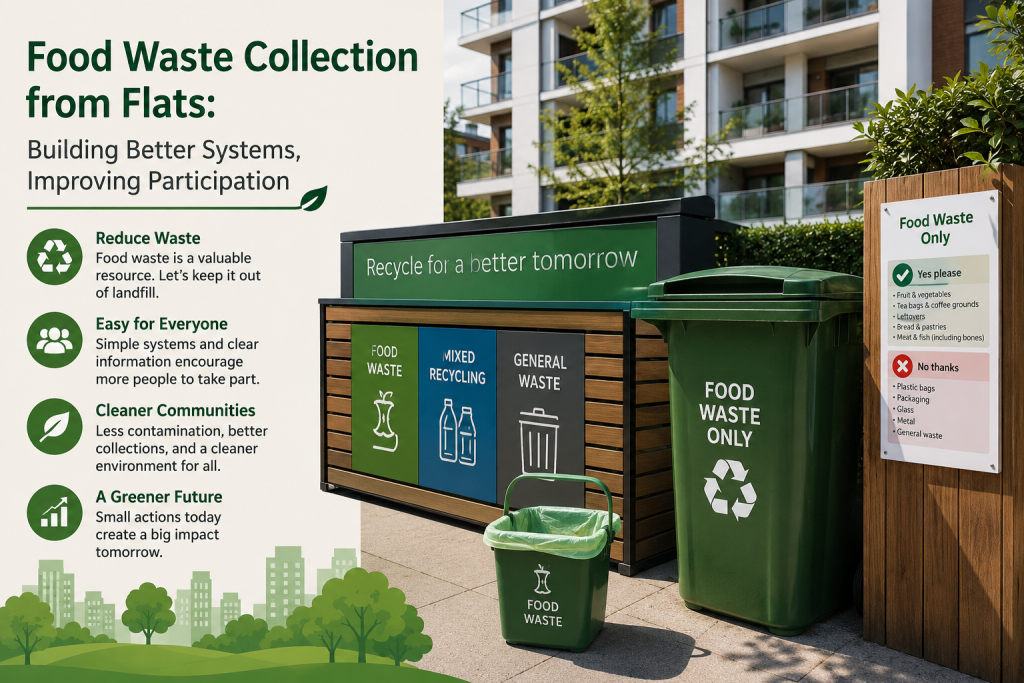
From April 2026, under the Simpler Recycling reforms in England, many local authorities and waste collection providers will be required to introduce separate food waste collections for households that do not already have them. While collecting food waste from individual houses is generally straightforward, flats and high-density residential developments present a much greater challenge. As […]
UK BAT 2026: What the New Best Available Techniques Mean for UK Industry
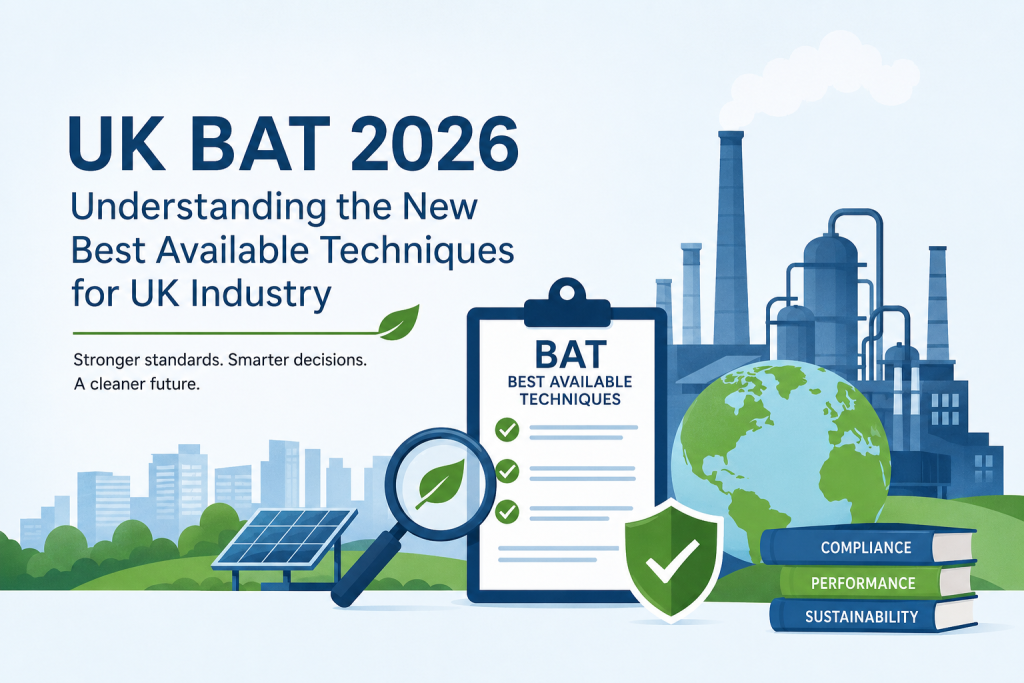
The UK environmental permitting landscape is entering one of its biggest changes since Brexit. Following the publication of the UK’s first independent Best Available Techniques (UK BAT) conclusions for the chemical sector, operators regulated under the Environmental Permitting Regulations will need to understand how these new requirements affect compliance, emissions, monitoring and future investment. At […]
Digital Waste Tracking
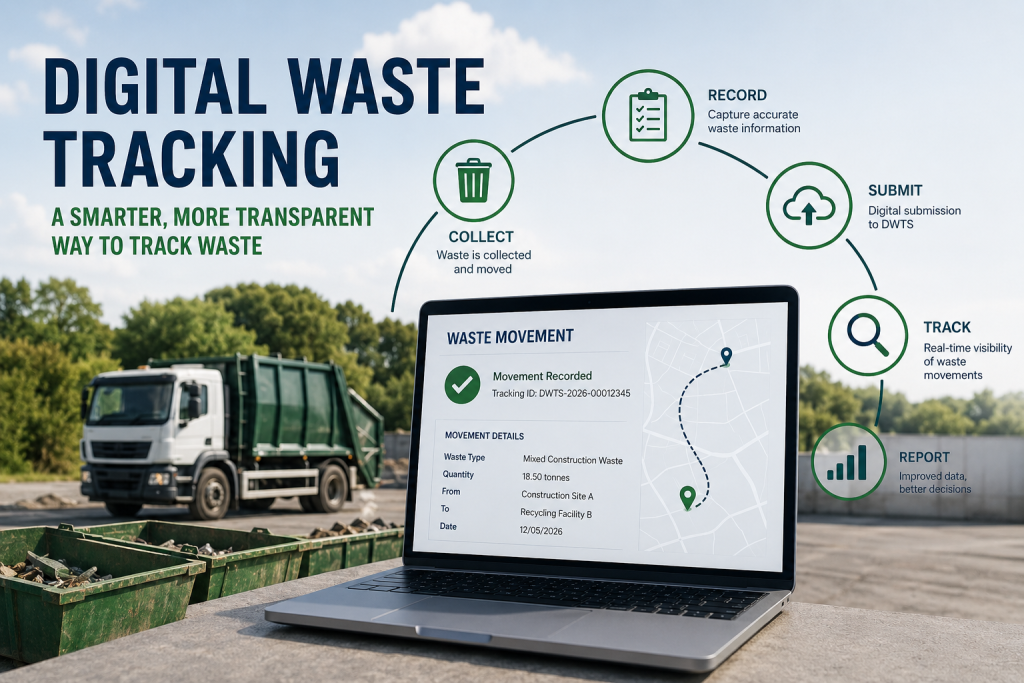
Digital Waste Tracking: What Waste Operators Need to Know Before October 2026 The UK’s waste sector is about to undergo one of its most significant regulatory changes in recent years. From 1 October 2026, the Digital Waste Tracking Service (DWTS) will become mandatory for permitted and licensed waste receiving sites across England, Wales and Northern […]
How Online Training Can Improve Construction Site Compliance

Virtual training offers several compelling advantages for improving compliance on construction sites. By combining interactive technology with expert instruction, it helps workers understand complex regulations, apply safety standards effectively, and maintain consistency across projects. Here’s how online training can improve construction site compliance. Enhanced Understanding and Retention: Interactive Learning: Virtual training can include quizzes, simulations, […]
How to Track and Reduce Construction Waste Using SitePlan

SitePlan is your all-in-one, easy-to-use, and cost-effective online tool for managing construction waste efficiently. It helps you create compliant Site Waste Management Plans (SWMPs) and Site Resource Management Plans (SRMPs) in just a few minutes.. It shows how to track and reduce construction waste efficiently. In addition, the platform automatically calculates your carbon footprint and […]
Pre-Demolition Audit Success: Regeneration Scheme in North London

Project Overview WPSCC were first contacted by a leading national property developer in March 2024, to produce a Pre-Demolition Audit. WPSCC visited a large estate comprising several buildings across multiple streets as part of a major regeneration scheme in North London. We had the opportunity to access the site and conducted a thorough inspection of […]
Understanding Environmental Impact Assessment in Construction

What is Environmental Impact Assessment (EIA)? EIA is a multi-staged process that evaluates the environmental impacts of a proposed project or development on the environment, people and society. Through EIA, measures to reduce or avoid impacts can be found in addition to finding reasonable alternatives to the project. The output of an EIA is an […]
How to achieve BREEAM accreditation for your project

What is BREEAM? BREEAM is the Building Research Establishment Environmental Assessment Method, utilised in master planning projects, buildings, and infrastructure. This sustainability assessment method was established in 1990 by the Building Research Establishment (BRE) and can be applied to refurbishment schemes or new developments. The standards for environmental performance of buildings through each phase of […]
A Guide to Circular Economy in the Built Environment

The circular economy priorities the reuse of materials in order to prevent the exacerbation of natural resources and the quantity of useable materials that end up in landfill. It can be classed as an economic model that builds system health by decoupling economic activity from the consumption of finite resources. Lifestyle and global demographic […]
Navigating the UK Environmental Permitting Regulations (EPR)

An environmental permit is required under the Environmental Permitting (England and Wales) Regulations 2016. A Permit allows the Operator to carry out various activities that may have an impact on the environment and human health. An operation’s impact on the environment, human health, and quality of life will be minimised as a result of having […]